
The Healing Power of Flowers Why You Should Get Closer to Nature

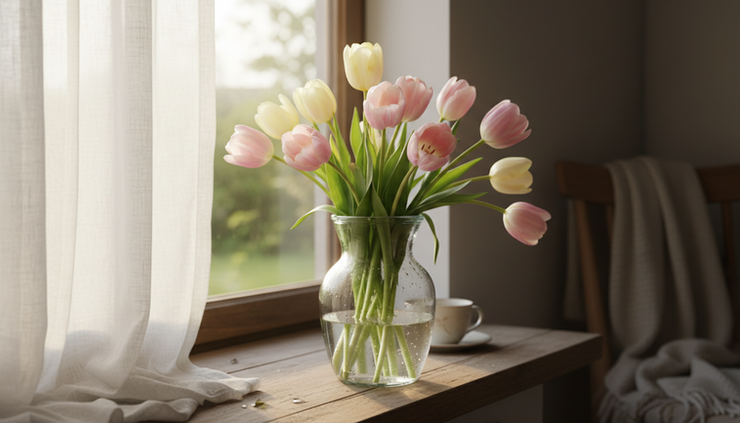
A handful of flowers on a kitchen table can change the feeling of a whole room. The air seems softer. The light feels kinder. Even before the flowers open fully, they give the eye somewhere gentle to rest.
That effect is not imaginary. Flowers speak to the senses in a way few everyday objects can. They bring colour, scent, texture, seasonality, and life into places that can feel flat or rushed. They remind us that growth is slow, beauty is temporary, and care does not have to be complicated.
The healing power of flowers does not mean petals are a cure for illness, grief, or stress. They are not a replacement for medical care or emotional support. This article is informational only. Yet research and everyday experience both suggest that being near flowers and natural settings can support mood, ease tension, and help people feel more connected to the world around them.
Getting closer to flowers is one of the simplest ways to get closer to nature. No hiking boots required. A windowsill, a garden path, a supermarket bouquet, a wild verge, or a single pot of lavender is enough.

The Power of Flowers: An Introduction to the Healing World of Essential Oil
Amazon Kindle Edition -https://amzn.to/3VugEx3
Flowers calm the nervous system through the senses
Modern life asks a lot from the brain. Screens pull attention. Noise fills small gaps. Messages arrive before the previous thought has settled. Flowers offer a different rhythm.
Their effect often begins with sight. A vase of tulips or a patch of marigolds breaks up hard lines and dull surfaces. Natural colours tend to feel less aggressive than artificial ones. Soft pinks, fresh greens, warm yellows, and deep purples can make a space feel more restful without needing a full redesign.
Scent works in a more direct way. The smell of roses, sweet peas, jasmine, lavender, or hyacinths can call up memories almost instantly. A grandparent’s garden. A spring walk. A wedding. A quiet churchyard. These memories may be tender, joyful, or bittersweet, but they often slow the mind down.
Touch matters too. Running fingers over a velvety petal or a smooth leaf brings attention back to the body. This small act can become a grounding exercise. It asks for nothing more than noticing:
The coolness of a stem
The weight of a flower head
The difference between crisp leaves and soft petals
The faint scent released by touch
This is why floristry, gardening, and even arranging a few stems can feel absorbing. The hands become busy in a peaceful way. The mind follows.
Flowers encourage attention without pressure. They invite looking, smelling, touching, trimming, watering, and waiting. Each act is small, but together they create a pause from mental noise.
Flowers remind us that beauty is seasonal
One reason flowers move us is that they do not last forever. A peony opens, becomes glorious, and then drops its petals. Cherry blossom appears like a cloud and is gone within days. Daffodils arrive after winter, bright and brave, then give way to bluebells and tulips.
This shortness is part of their value.
Many people try to avoid endings. Flowers place endings in plain sight, but in a gentle form. They show change without drama. A fading bloom does not mean failure. It means the flower completed its cycle.
That can be surprisingly comforting. In a culture that often prizes constant productivity, flowers teach a quieter lesson. Rest matters. Seasons matter. Not every stage of life looks the same.
A garden makes this visible across the year. In late winter, snowdrops push through cold soil. In spring, hellebores, crocuses, and narcissi appear. Summer brings roses, foxgloves, cosmos, dahlias, and sweet peas. Autumn has seed heads, chrysanthemums, asters, and fading grasses that catch the low light.
Even cut flowers carry this rhythm indoors. Watching them open day by day builds a sense of time that feels more human than a calendar alert.
The Power of Flowers: An Introduction to the Healing World of Essential Oil
Amazon Kindle Edition -https://amzn.to/3VugEx3
There is also a lesson in maintenance. Flowers need clean water. Some need lower leaves removed. Many last longer if stems are trimmed. A little care changes the outcome.
That can mirror how people recover from strain. A person may not need a complete change of life to feel a little better. Sometimes the first step is fresh water, more light, and one small daily act of care.
Flowers can support connection and memory
Flowers often appear at life’s emotional edges. Births, weddings, funerals, anniversaries, apologies, thank-yous, hospital visits, and quiet acts of kindness. They help people say what can be hard to put into words.
A bunch of flowers does not solve pain. It does not erase loss. Yet it can say, “I thought of you.” That message has weight. The gesture matters because flowers are living, temporary, and chosen.
This is why flowers can feel personal. Someone remembers that a friend loves irises. A neighbour leaves sunflowers at a door. A child brings home daisies in a fist. A family plants forget-me-nots, lavender, or roses in memory of someone they miss.
Flowers also connect people to place. The scent of gorse on a coastal walk, bluebells in ancient woodland, hawthorn blossom along a lane, or elderflower in early summer can become tied to a region and a time of year. These natural markers give texture to memory.
For many people, flowers also reconnect them with family history. A rose grown from a cutting. A favourite border plant from childhood. Marigolds sown every year because someone used to grow them. These links are not grand, but they are deep.
Nature becomes more meaningful when it is personal. A flower is not just an object. It can hold a story.
This is one reason hospital gardens, community gardens, allotments, and care home planting schemes can feel so valuable. They give people a shared point of attention. Someone who struggles to start a conversation may find it easier to comment on a plant, ask its name, or remember where they once saw it growing.
Flowers soften social space. They give people something kind to gather around.
Getting closer to flowers does not require a garden
Many people think they need a big garden to enjoy flowers properly. They do not. Flowers can fit into almost any life, including flats, rented homes, shared spaces, and busy routines.
A windowsill can hold herbs, geraniums, African violets, miniature roses, or a small pot of bulbs. A balcony can support nasturtiums, pansies, calendula, lavender, or compact sweet peas. A doorstep can hold a container of pelargoniums or spring bulbs. Even a desk, shelf, or bedside table can hold one stem in a jar.
For those who cannot grow flowers, noticing them still counts. A walk past front gardens. A visit to a park. A few minutes in a churchyard full of wildflowers. A bunch bought with the weekly shop. A photograph taken on a spring walk. These moments still bring the mind closer to the living world.
Here are simple ways to bring flowers into ordinary days:
Keep one small vase where it can be seen often The kitchen table, bedside table, or hallway can work well.
Choose flowers with scent Sweet peas, stocks, roses, lilies, lavender, and hyacinths can make a room feel alive. Take care with lilies around cats, as they are highly toxic to them.
Grow something easy from seed Nasturtiums, calendula, cosmos, and cornflowers are good starting points.
Learn the names of local flowers Naming turns “a plant” into something familiar. It also makes walks more interesting.
Press or dry a few flowers This creates a small record of a season, a day out, or a meaningful gift.
Visit flowers in public places Parks, botanical gardens, allotment open days, community gardens, and woodland walks all offer low-cost contact with blooms.

The Power of Flowers: An Introduction to the Healing World of Essential Oil
Amazon Kindle Edition -https://amzn.to/3VugEx3
The key is to keep it easy. A flower habit should not become another task that causes guilt. If a plant fails, try another. If a bouquet fades, compost it if possible and begin again. Nature is generous, but it is not perfect.
Flowers invite a slower way of paying attention
The deeper gift of flowers may be the way they train attention. To enjoy them fully, a person has to slow down at least a little.
Look closely at a foxglove and the markings inside each bell appear. Look at a dahlia and the structure becomes almost mathematical. Look at a poppy and its delicacy becomes clear. The petals seem too thin to survive, yet they do.
This kind of looking is different from scrolling. It is slower, richer, and more physical. It has no performance built into it. A flower does not ask to be rated. It simply exists.
Spending time with flowers can also revive curiosity. Why do bees prefer one bloom over another? Why do some flowers close at night? Why do roses have thorns? Why does lavender thrive in dry soil? A simple flower can open the door to botany, ecology, seasons, pollinators, soil, weather, and food systems.
That curiosity matters because care often begins with attention. People protect what they notice. A person who starts with a pot of marigolds may begin to notice bees. Then they may plant more pollinator-friendly flowers. Then they may leave seed heads standing in winter or avoid harsh chemicals in the garden.
Flowers can become a small route into environmental care. Not through guilt, but through affection.
Closeness creates care. The more familiar the natural world becomes, the harder it is to treat it as background.

The Power of Flowers: An Introduction to the Healing World of Essential Oil
Amazon Kindle Edition -https://amzn.to/3VugEx3
Start with one flower. Put it somewhere visible. Learn its name if you can. Notice how it opens, how it leans towards light, how its colour changes through the day. Water it. Trim it. Watch it fade without rushing to replace it.
That small act may not transform everything. It can still change the texture of a day.
Flowers bring nature close enough to touch. They offer beauty without demanding much in return. They remind us to pause, to care, to notice, and to live more gently with the seasons. In a loud world, that is no small kind of healing.


Comments